
Formosan vs. Subterranean Termites on the Mississippi Gulf Coast: What Every Homeowner Needs to Know
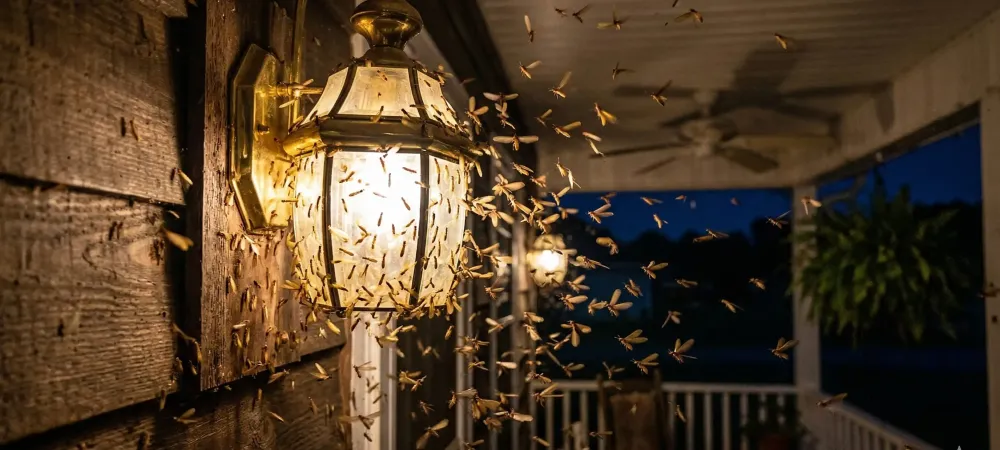
If you've ever seen a cloud of winged insects swirling around a porch light in May, you've witnessed a Formosan termite swarm. It's one of the most alarming signs that these insects are active in your neighborhood. In our 13 years serving homeowners across the Gulf Coast, the calls that concern us most aren't the ones where someone spots a bug. They're the ones that come after a swarm has been ignored for a season or two. By then, the damage is often well underway.
Mississippi sits in one of the most termite-active regions in the country, and two species in particular put Gulf Coast homes at serious risk every spring. Knowing the difference between them could save you thousands of dollars in repairs.
What Is the Difference Between Formosan and Subterranean Termites?
Formosan and Eastern subterranean termites are both ground-dwelling species found throughout the Mississippi Gulf Coast, but they are not equally dangerous. Formosan termite colonies can contain more than one million workers and cause significant structural damage in as little as two to three years. Eastern subterranean colonies are far smaller and slower-moving. Formosans swarm at night around Mother's Day, while Eastern subterranean termites swarm during daylight hours from February through May.
What You Need to Know Right Now
- Formosan termites swarm at night around Mother's Day on the Gulf Coast and are far more destructive than native subterranean termites, with larger colonies, faster damage, and harder-to-treat infestations.
- Finding swarmers inside your home is a red flag. It likely means an active colony is already established in or near your structure.
- The treatment window matters. Getting a professional inspection before May is the most effective time to protect your home ahead of the Formosan swarm season.
Why Gulf Coast Homeowners Face a Bigger Termite Threat
The warm, humid climate along the coast creates near-perfect conditions for termite colonies to grow year-round. The native Eastern subterranean termite is present in every county in Mississippi and has long been a concern for homeowners. But the Formosan subterranean termite, an invasive species first detected in Mississippi in 1984, has steadily expanded its range across the southern part of the state and is now well established throughout the Gulf Coast counties.
These two species are often confused with each other, but the differences between them matter significantly when it comes to how your home is protected and treated. Understanding the seasonal pest timeline for Gulf Coast homeowners can help you stay ahead of both species before swarm season begins.
What Makes Formosan Termites So Much More Dangerous?
The size difference between these two species is staggering. According to the Mississippi State University Extension Service, Formosan termite colonies often contain more than one million workers spanning an area the size of a football field. A mature Eastern subterranean colony typically holds tens of thousands to a few hundred thousand termites. That difference in scale translates directly into how quickly structural damage can occur.
MSU Extension urban entomologist Santos Portugal puts it plainly: the relationship between Formosans and native termites is like the difference between black bears and grizzly bears, with Formosans being the grizzlies. What we've seen over the years confirms that. Formosan infestations can cause serious structural damage in a fraction of the time it takes native species, sometimes within two to three years of a colony establishing inside a wall.
Formosans also have a unique ability to sever their connection to the soil entirely. They build what are called carton nests, self-contained moisture structures made from chewed wood and soil, inside walls, ceilings, and even living trees. This makes them far more difficult to detect and treat with standard soil-barrier methods alone.
How to Tell the Difference: Key Identification Signs
Knowing which species you're dealing with starts with understanding when and how they swarm, and what to look for when they do.
Eastern subterranean termites:
- Swarm during daylight hours, typically from mid-February to mid-May
- Swarmers are dark brown to black, about 3/8 inch long, including wings
- Not attracted to artificial light sources
- Swarmers found indoors are a strong indicator of an active infestation
Formosan subterranean termites:
- Swarm at night, typically around Mother's Day on the Gulf Coast and into June
- Swarmers are golden to yellowish-brown, slightly larger at about 1/2 inch, including wings
- Strongly attracted to porch lights, streetlights, and lit windows
- May emerge from swarm castles, irregular hardened mud patches that appear overnight on interior walls or ceilings in late spring
- Swarms in heavily infested neighborhoods have been large enough to appear on weather radar
One more identification detail worth knowing: Formosan soldiers have a distinctly teardrop-shaped head, while Eastern subterranean soldiers have a rectangular, blocky head. If you find soldiers near active tunneling, that shape difference is diagnostic.
What Happens If You Just Wait It Out?
It's tempting to dismiss a swarm as a one-time event, especially if the swarmers don't appear to be entering the house. A swarm outdoors doesn't mean your home is safe, though. It means termites are present in your area and actively seeking new places to establish colonies.
The MSU Extension guide on termite protection is direct on this point: any building in Mississippi that isn't properly protected will eventually sustain termite damage. With Formosans, that timeline can be compressed significantly.
DIY liquid termiticides can help create a temporary soil barrier, but they rarely achieve the depth, coverage, or consistency of a professional application. Formosan infestations that have established aerial carton nests above the soil won't respond to soil treatments at all. A standard hardware store product isn't built to address a colony of a million insects. On top of that, moisture problems that attract termites often go undetected until a professional inspection uncovers them.
How Professional Termite Treatment Addresses Both Species
Effective termite protection on the Gulf Coast requires a strategy that accounts for both native and Formosan species. At Mayley's Pest Control, our termite control services begin with a thorough inspection to identify signs of activity, assess conducive conditions, and determine whether a soil-based treatment, a baiting system, or a combination approach is most appropriate for your property.
- Liquid termiticide barrier treatments create a treated zone in the soil around the foundation that kills or repels termites before they can enter the structure. These are effective for both species when properly applied.
- Sentricon® baiting systems use slow-acting bait that worker termites carry back to the colony, eliminating it from the inside out. These work well as both treatments and long-term monitoring tools.
- Aerial colony treatment: When Formosan carton nests are found above the soil, additional targeted treatment is required. In severe cases, fumigation services may be the most effective path forward.
- Ongoing monitoring: Because Formosans can re-establish from neighboring colonies, annual inspections and a termite warranty program are highly recommended for Gulf Coast homes.
For homebuyers, we also provide Wood-Destroying Insect Reports (WDIR), a required document for most mortgage lenders that confirms whether active termite activity or damage is present in the property.
If you're seeing swarmers now or want to get ahead of the season, contact us for a free termite consultation before the Formosan swarm window opens.
How to Reduce Termite Risk Around Your Home
No prevention method eliminates risk entirely in a termite-active region like the Gulf Coast, but these steps reduce the likelihood of infestation and help professionals spot problems earlier:
- Keep mulch at least 6 inches away from your foundation; mulch retains moisture and gives termites direct soil-to-wood access
- Stack firewood away from the house and off the ground
- Fix plumbing leaks, roof leaks, and HVAC condensation issues promptly; moisture in walls creates ideal Formosan nesting conditions
- Don't let soil or mulch accumulate against wood siding, door frames, or window trim
- Inspect your attic and crawl space annually for mud tubes, soft wood, or swarm castles
- Replace outdoor lighting with yellow or sodium vapor bulbs during swarm season; Formosan swarmers are heavily attracted to white and UV light
- Maintain a current termite protection plan and don't let warranties lapse
Understanding how Gulf Coast humidity fuels pest pressure can help you make smarter decisions about moisture control throughout the year.
When to Call a Professional Right Away
Some situations can't wait for a routine appointment. Contact a licensed termite control company right away if you:
- Find swarmers inside your home, especially in spring
- Discover mud tubes on interior walls, baseboards, or crawl space piers
- Notice soft or hollow-sounding wood in flooring, window sills, or structural framing
- See hardened mud-like patches appear overnight on ceilings or upper walls (swarm castles)
- Have had a previous termite treatment, and it's been more than a year since your last inspection
- Preparing to buy or sell a home and need a WDIR
In our experience, the homeowners who have the best outcomes are the ones who call early, before the colony has had time to cause significant structural damage. The ones who wait tend to face much larger repair bills alongside the treatment cost.
Protect Your Gulf Coast Home Before Swarm Season Peaks
Formosan termite swarm season on the Mississippi Gulf Coast runs from early May through June, but colony activity that threatens your home starts long before the first swarmer appears. Getting a professional inspection now, while we're still in the pre-swarm window, is the most cost-effective way to identify risk and put protection in place before it's needed.
Mayley's Pest Control has been protecting Gulf Coast homes from Eastern subterranean and Formosan termites for 13 years. We offer free termite consultations, Sentricon® baiting systems, liquid barrier treatments, WDIR reports, and a termite warranty program designed for the unique challenges of coastal Mississippi.
Call us at 228-380-0295 or request your free termite consultation online to get ahead of swarm season before it opens.
Sources
- Portugal, Santos. "Formosan Termite Swarms Threaten Large Part of State." Mississippi State University Extension Service, 13 Mar. 2024, extension.msstate.edu/news/feature-story/2024/formosan-termite-swarms-threaten-large-part-state.
- Layton, Blake. "Species of Termites in Mississippi." Mississippi State University Extension Service, extension.msstate.edu/insects/termites/species-termites-mississippi.
- Layton, Blake. "Protect Your House from Termites." Mississippi State University Extension Service, extension.msstate.edu/publications/protect-your-house-termites.